

TL;DR:
- Payment trends in 2026 are driven by AI-enabled agentic commerce, tokenized payment standards, and real-time cross-border infrastructure. These innovations reshape money movement, fraud detection, and competitive strategies, with foundational data, proper tokenization, and continuous fraud monitoring becoming crucial to success.
Payment trends in 2026 are defined by three forces: AI-driven agentic commerce, tokenized payment standards like Click to Pay, and real-time cross-border infrastructure built on blockchain middleware. These are not incremental upgrades. They reshape how money moves, how fraud is detected, and how businesses compete. J.P. Morgan Payments, Visa, and ISO 20022 adoption are setting the pace, while global cybercrime costs hit $10.5 trillion in 2025 alone. Finance professionals who understand these shifts now will hold a measurable advantage through the rest of the decade.
What are the biggest payment trends in 2026?
AI, tokenization, and real-time settlement are the three defining forces of 2026 payment technologies. Each one operates independently, but together they are restructuring the entire payments stack, from checkout to treasury to fraud prevention.

Agentic commerce is the most disruptive of the three. AI agents now browse, compare, and complete purchases on behalf of consumers without human input at checkout. This changes the fundamental question for payment providers. The goal is no longer just improving conversion rates. The central strategic question, as payment leaders now frame it, is becoming the payment method that AI agents select by default.
Tokenization is the second force. Visa’s Click to Pay standard replaces raw card numbers with encrypted tokens at every transaction point. This reduces fraud exposure at the source rather than trying to catch it downstream. Tokenized payments are becoming the default method for online commerce, not an optional add-on.
Real-time settlement is the third. ISO 20022 messaging standards, cloud-based treasury systems, and blockchain middleware are eliminating the delays that made cross-border payments expensive and opaque. Businesses that still rely on batch processing are already operating at a structural disadvantage.
How is AI transforming payment ecosystems?
AI is changing payments at two levels: transaction routing and autonomous commerce. Both carry significant revenue implications for legacy providers.
At the routing level, AI models analyze transaction data in real time to select the lowest-cost, highest-success payment path. Organizations using AI-enhanced data intelligence are up to 3 times more likely to achieve double-digit revenue growth compared to businesses using traditional reporting. That gap will widen as AI models improve.
At the commerce level, agentic systems are beginning to replace human decision-making at checkout. Platforms like Alipay’s AI wallet already demonstrate token-based payments triggered by AI agents without manual input. The implications for card networks are severe. A shift of just 50% of card transactions to lower-cost account-to-account payments could cost legacy card networks $7.2 billion in revenue.
The risks are real, though. AI agents introduce new fraud vectors, including agent impersonation and unauthorized transaction execution. Trust frameworks for verifying agent identity do not yet exist at scale.
- AI routing optimization selects the cheapest, most reliable payment path in real time.
- Agentic checkout completes purchases without human confirmation, raising authorization and fraud questions simultaneously.
- Revenue disruption threatens card networks as A2A payments grow through AI-driven routing.
- Agent impersonation fraud is an emerging threat with no standardized defense yet.
- Data intelligence gaps leave most businesses unable to compete with AI-native payment operators.
Pro Tip: Before deploying any AI-driven payment routing, audit your transaction data quality first. AI models are only as accurate as the data they train on. Garbage data produces expensive misroutes.
Most merchants are not ready for agentic commerce. Catalog readiness is the primary bottleneck. AI agents require structured, machine-readable product data to execute purchases. Most e-commerce catalogs are built for human browsers, not AI parsers. Fixing this is a prerequisite, not a nice-to-have.
How does tokenization reduce fraud and improve checkout?
Tokenization is the single most effective fraud reduction tool available to merchants right now. It replaces a customer’s actual card number with a one-time encrypted token that has no value outside that specific transaction.
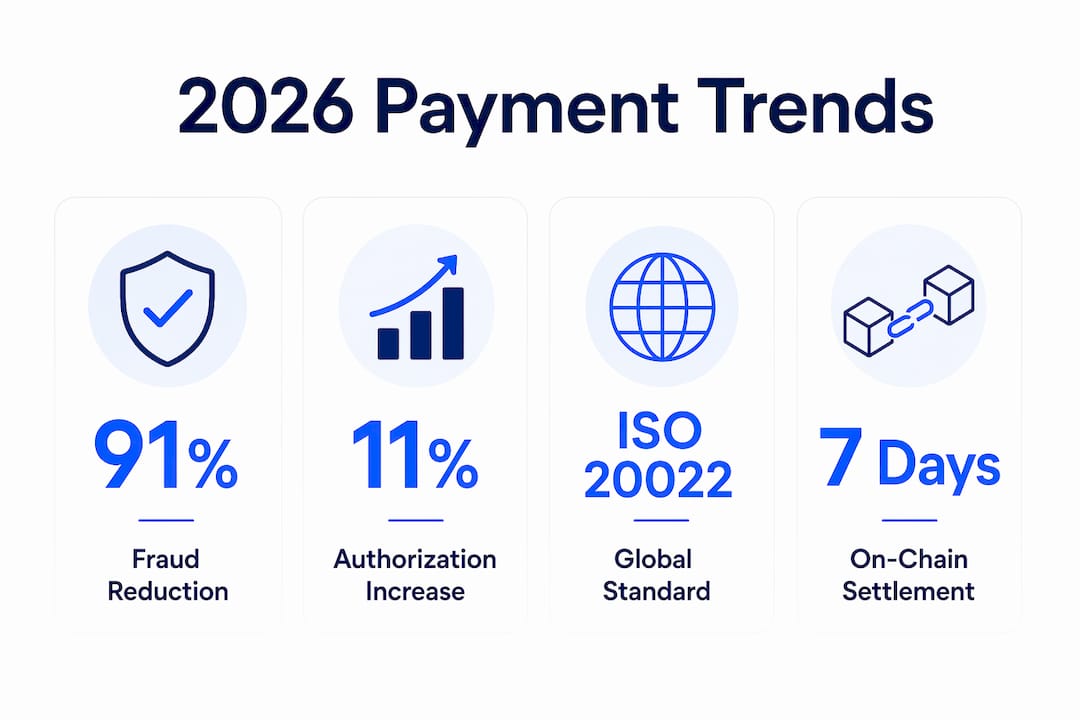
Visa’s Click to Pay standard delivers measurable results. Tokenized transactions reduce fraud by up to 91%, increase authorization rates by 11%, and cut checkout time by 20 seconds. Each of those numbers represents direct revenue impact. Fewer fraud chargebacks, more completed transactions, and faster checkout all compound into meaningful margin improvement.
Click to Pay is no longer optional infrastructure. It is becoming the default method for online card payments. Merchants who have not integrated it are already seeing higher fraud rates and lower authorization rates compared to tokenized competitors. The gap will grow as adoption accelerates.
Pro Tip: When evaluating tokenization vendors, ask specifically about network token coverage across Visa, Mastercard, and American Express. A solution that only tokenizes one network leaves significant fraud exposure on the table.
Finance professionals tracking consumer payment behavior in 2026 note that checkout abandonment drops sharply when stored credentials and tokens eliminate manual card entry. The 20-second checkout improvement is not a minor UX detail. It directly reduces cart abandonment at the final payment step, which is where most e-commerce revenue leaks occur.
What is driving real-time and borderless payment growth?
Real-time payment infrastructure is shifting from a competitive advantage to a baseline expectation. ISO 20022 adoption, cloud-based treasury systems, and blockchain middleware are the three pillars driving this shift.
ISO 20022 is the global messaging standard for financial transactions. It carries richer data than older formats, enabling automated reconciliation, faster dispute resolution, and better fraud screening. Banks and payment processors that have not migrated to ISO 20022 face growing compatibility problems as the standard becomes universal.
Blockchain middleware is solving the cross-border settlement problem without forcing banks to abandon existing systems. Middleware projects allow banks to keep traditional SWIFT and ISO 20022 messaging while using blockchain rails for settlement and liquidity. This eliminates raw crypto exposure while capturing the speed and transparency benefits.
| Technology | Primary Benefit | Adoption Status |
|---|---|---|
| ISO 20022 | Richer transaction data, automated reconciliation | Active global rollout |
| Blockchain middleware | Faster cross-border settlement, no system overhaul | Pilot stage, expanding |
| Stablecoin settlement | Seven-day onchain liquidity, global reach | Visa pilot, billions moved |
| Cloud treasury systems | Always-on liquidity management, real-time visibility | Mainstream adoption |
Visa is expanding stablecoin settlement pilots globally. These pilots move billions annually with seven-day onchain settlement cycles. The focus has shifted from simple crypto adoption to programmable money via tokenized deposits. This combines banking stability with blockchain settlement speed, a combination that traditional wire transfers cannot match.
Project Pangea and similar cross-border initiatives demonstrate that always-on treasury management is achievable without replacing core banking infrastructure. The key is layering new settlement rails on top of existing messaging standards rather than replacing them.
What fraud threats define online payment security in 2026?
Fraud in 2026 is more sophisticated, more automated, and more expensive than at any prior point. The numbers are not abstract. Cybercrime costs $10.5 trillion globally, and 79% of U.S. businesses reported fraud attempts in 2024. Deepfakes now account for 40% of biometric fraud attempts. That last figure signals a fundamental shift in attack methodology.
Biometric authentication was considered near-impossible to spoof five years ago. AI-generated deepfakes have changed that calculus entirely. Fraudsters now generate synthetic voice and video to defeat identity verification systems that rely on biometrics alone. Businesses using single-factor biometric checks are exposed.
“Banks need AI as an antiviral, not a feature.” This framing, from Entersekt’s CIO, captures the required mindset shift. AI fraud detection cannot be a bolt-on module. It must be embedded in every transaction layer continuously.
The most effective defenses combine several approaches:
- Continuous behavioral monitoring tracks transaction patterns in real time rather than screening at entry points only.
- AI-powered anomaly detection identifies deviations from established spending patterns faster than rule-based systems.
- Tokenization at the transaction level removes raw card data from the attack surface entirely.
- Multi-factor verification for AI agents adds identity checks that go beyond standard consumer authentication.
- Cross-border AI fraud detection applies machine learning models specifically trained on international transaction patterns.
Agent impersonation is the emerging threat that most fraud teams are not yet equipped to handle. When an AI agent executes a payment, verifying that the agent is legitimate and authorized requires trust frameworks that the industry has not yet standardized. Businesses deploying agentic payment systems in 2026 need explicit agent authentication policies before going live.
Key Takeaways
The most important fact in 2026 payments is this: tokenization, AI-driven routing, and real-time settlement are no longer future capabilities. They are active competitive requirements that separate growing businesses from stagnant ones.
| Point | Details |
|---|---|
| Tokenization reduces fraud sharply | Click to Pay cuts fraud by up to 91% and improves authorization rates by 11%. |
| AI data intelligence drives growth | Businesses using AI-enhanced analytics are up to 3x more likely to achieve double-digit revenue growth. |
| Agentic commerce requires catalog readiness | Most merchants cannot support AI-driven checkout because their product data is not machine-readable. |
| Blockchain middleware enables faster settlement | Banks can adopt blockchain settlement speed without replacing SWIFT or ISO 20022 infrastructure. |
| Deepfake fraud demands layered defenses | Biometric checks alone are insufficient as deepfakes now drive 40% of biometric fraud attempts. |
My read on where payment strategy actually breaks down
Most finance teams I see are treating 2026 payment trends as a technology checklist. Implement tokenization. Evaluate AI routing. Review ISO 20022 readiness. Check the boxes and move on. That approach will fail.
The real problem is sequencing. Businesses that deploy AI-driven payment routing before cleaning up their transaction data get worse outcomes than those using manual processes. AI amplifies the quality of your inputs. Bad data produces confidently wrong routing decisions at scale.
Agentic commerce is the area where I see the most dangerous overconfidence. The concept is compelling. AI agents that complete purchases autonomously, with no friction at checkout, sound like pure upside. The reality is that most merchants are not structurally ready. Their catalogs are not machine-readable, their fraud controls do not account for agent impersonation, and their authorization flows assume a human is confirming the transaction. Deploying agentic checkout on top of that infrastructure is not an upgrade. It is a liability.
The businesses that will win in this environment are not the ones that adopt every new payment technology first. They are the ones that build clean data foundations, implement tokenization properly, and treat fraud detection as a continuous system rather than a periodic audit. The $7.2 billion revenue threat to card networks is real, but the businesses that position themselves as the trusted payment layer for AI agents will capture that value rather than lose it.
Proactive adaptation here means starting with what you can control: your transaction data quality, your tokenization coverage, and your fraud monitoring depth. Get those right before chasing agentic commerce pilots.
— dd
Demivolt and the infrastructure behind 2026 payment compliance
Keeping pace with 2026 payment technologies requires more than strategy. It requires infrastructure that handles SEPA, SWIFT, and cross-border compliance without creating operational drag.
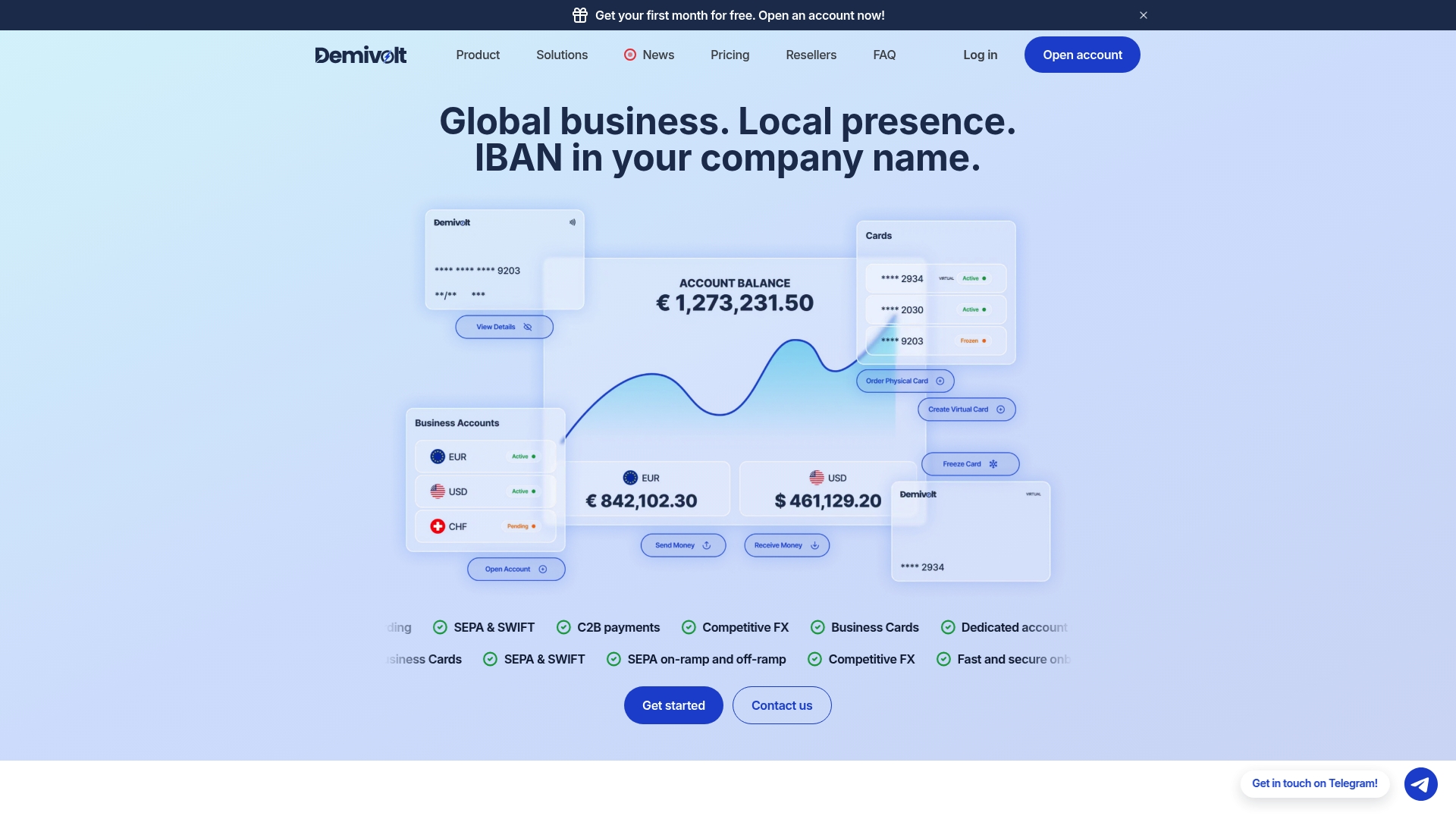
Demivolt provides regulated European business banking built for exactly this environment. Companies can open dedicated IBAN accounts, manage inbound and outbound payments across SEPA and SWIFT networks, and issue virtual and physical business cards for expense control. For finance teams validating payment routing and account data, Demivolt’s IBAN validation tool checks account numbers against ISO 13616 standards instantly. The full suite of free SEPA tools supports payment compliance without adding headcount. Businesses operating across borders get the financial control and regulatory clarity that 2026 payment operations demand.
FAQ
What is agentic commerce in payments?
Agentic commerce is when AI agents browse, select, and complete purchases autonomously without human confirmation at checkout. It introduces new fraud risks around agent identity verification and authorization.
How much does tokenization reduce payment fraud?
Visa’s Click to Pay tokenization reduces fraud by up to 91% and increases authorization rates by 11%. It also cuts checkout time by 20 seconds per transaction.
What is ISO 20022 and why does it matter?
ISO 20022 is the global standard for financial messaging that carries richer transaction data than older formats. It enables automated reconciliation, faster dispute resolution, and better fraud screening across cross-border payments.
How do deepfakes threaten payment security in 2026?
Deepfakes now account for 40% of biometric fraud attempts, making single-factor biometric authentication unreliable. Businesses need layered verification that combines behavioral monitoring with AI-powered anomaly detection.
What is the biggest risk of AI-driven payment routing?
The biggest risk is poor data quality. AI routing models amplify the accuracy of their inputs, so businesses with unclean transaction data will get worse outcomes than those using manual processes.